Why it went up
Left for dead
Moderna entered 2026 as a fallen giant. Revenue peaked at $18.9 billion in 2022, when its COVID vaccine was a household name. By 2025 revenue had collapsed to $1.9 billion, the company lost $2.8 billion on the year, and the stock closed out 2025 at $29.49. It still held roughly $8.1 billion in cash and investments, enough to buy time, but Wall Street had largely moved on. Bank of America rated the shares Underperform, and short sellers had borrowed about 20% of the float, one of the heaviest short positions among US large caps. The bear case wrote itself: a one-product company whose product was fading.
The slow rebuild
The first seven months of 2026 were a grind, not a launch. Moderna cut costs, kept beating modest earnings expectations, and stacked up proof points for its platform. On January 20, Merck and Moderna released five-year data from a Phase 2b study of intismeran, their personalized cancer vaccine, given with Merck's Keytruda: the combination cut the risk of recurrence or death by 49% versus Keytruda alone. It was mid-stage data, but it was the scientific foundation for everything that came later.
February showed how fragile the story still was. The FDA refused to file Moderna's seasonal flu vaccine application, questioning the trial design for patients over 65. A little over a week later, on February 18, the agency reversed course and accepted an amended application. On March 3, Moderna removed another overhang, agreeing to pay $950 million to settle the Arbutus and Genevant patent litigation over the lipid technology used to deliver its vaccines, with no future royalties on its infectious disease products. Jefferies said the deal removed the worst case.
On August 5, the FDA approved mFLUSIVA, the first mRNA flu vaccine in the United States, and Moderna's fourth approved US product. Earnings stayed unspectacular throughout: second-quarter revenue was only $145 million, and in late July a Phase 3 trial of Moderna's norovirus vaccine missed its early-success criteria at an interim readout and the stock fell. By mid-August the shares had roughly doubled on the year to about $63, respectable, and almost nobody on Wall Street was pounding the table.
August 19: the day it went vertical
On August 19, Moderna and Merck announced that INTerpath-001, a Phase 3 trial in 1,137 patients whose high-risk melanoma had been surgically removed, had met its primary endpoint. Patients who received intismeran plus Keytruda went longer without their cancer returning than patients on Keytruda alone, and a key secondary measure, time without the cancer spreading to distant sites, was met as well. It was the first positive Phase 3 result for an individualized neoantigen therapy, and for any mRNA cancer treatment. The announcement was top-line only: no hazard ratios, no survival data, those details were promised for a later date.
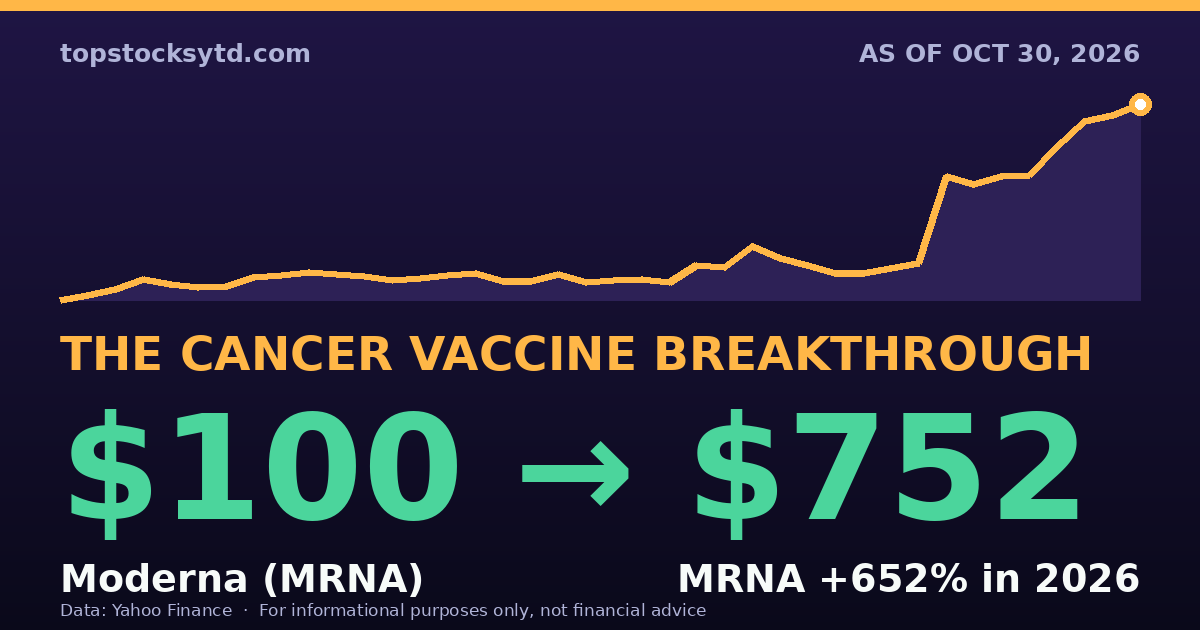
The reaction was historic. Shares closed up 177% that day, at $174.38, from $62.96 the day before, on roughly 200 million shares traded. According to Dow Jones data reported by The Wall Street Journal, it was the largest one-day percentage gain for an S&P 500 stock in 25 years, and it added roughly $44 billion to Moderna's market value in a single session.
A crowded short trade turned a spike into an explosion. About 13.7% of the float was sold short going into the announcement, and as the price ran, shorts had to buy back shares at almost any price. ORTEX estimated short sellers were carrying roughly $4.8 billion in paper losses that day. Bank of America dropped its Underperform rating, moved to Neutral, and raised its price target from $40 to $170 the same week, calling the result a watershed moment. The next day the stock fell about 20% as the squeeze burned off, but it never went back: August closed as the best month in the company's history.
The victory lap, and the doubters
The follow-through carried the stock the rest of the way. On October 1, Nasdaq announced Moderna would rejoin the Nasdaq-100 index, effective October 9, a move that forces index funds to buy the shares. Bank of America raised its target again, to $200. Moderna and Merck deepened a collaboration with Tempus, a health technology company, aimed at supporting a possible future launch of a vaccine that is manufactured one patient at a time. By late October the shares were near $246, valuing the company at roughly $90 billion.
The doubters never left. Average analyst price targets still sat around $104 to $123 in October, roughly half the share price, and the consensus rating was Hold. Citi cut Moderna to Sell with an $80 target in late September, arguing the company was being valued like Regeneron on a fraction of the revenue. Rothschild & Co Redburn rated it Sell at $81, arguing the price already assumes intismeran succeeds in cancers where it has no Phase 3 proof. And the biggest question in the story is still open: the full INTerpath-001 results, including the hazard ratios that will show the size of the benefit, are scheduled for a Presidential Symposium at the ESMO congress on October 24, 2026. Intismeran is not approved anywhere, and as of mid-October the companies were still preparing their regulatory filings.
That is the story behind the number at the top of this page: a hypothetical $100 placed in Moderna at the start of 2026 is worth $751.85 today, because a personalized cancer vaccine hit its Phase 3 target on one August morning, and one of the most crowded short trades in the market had to run for the exits.
Sources: Reuters, The Wall Street Journal, Moderna and Merck company releases, FiercePharma.